Aloe Vera
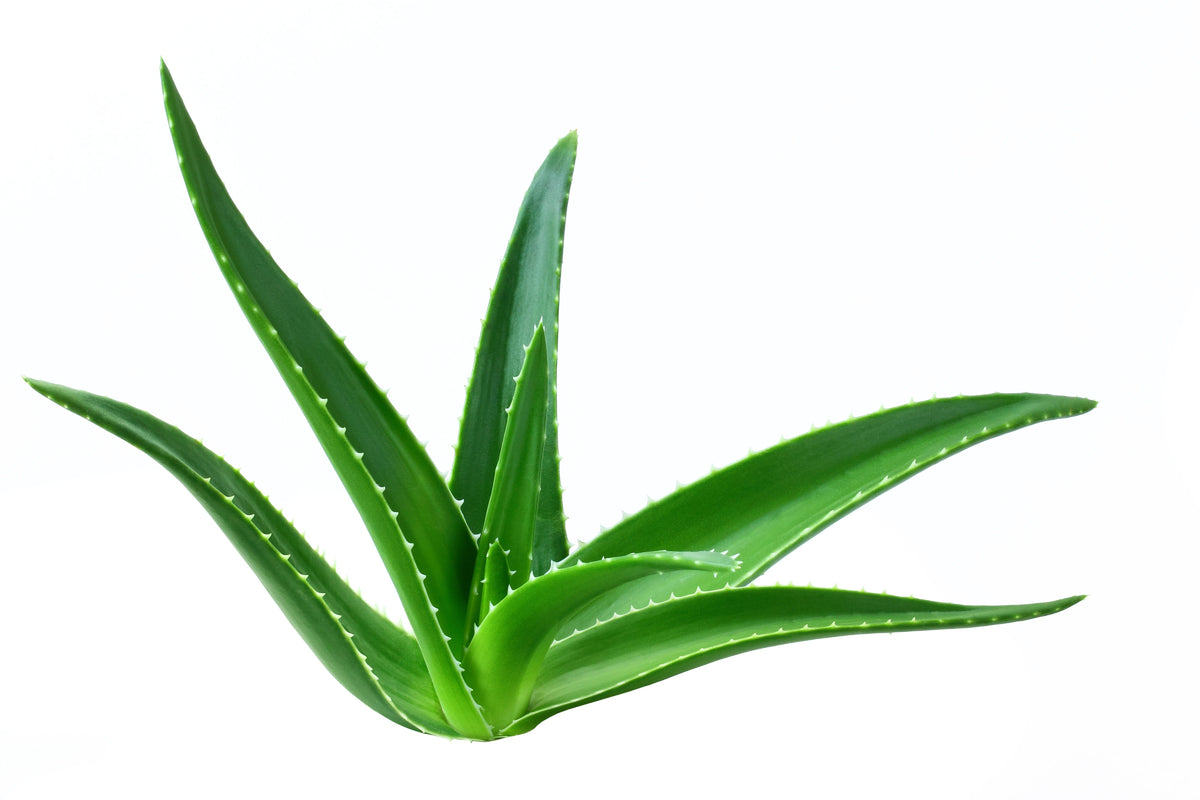
Aloe vera is a succulent plant used in skincare as a gel or extract, celebrated for its soothing, hydrating, and healing properties, thanks to its rich mix of polysaccharides, vitamins, and anti-inflammatory compounds.
DESCRIPTION
Aloe vera, scientifically known as Aloe barbadensis miller, is a perennial succulent from the Asphodelaceae family, native to the Arabian Peninsula but now cultivated worldwide in warm, dry climates like Africa, India, and the Americas. In skincare, it’s primarily used as a gel (harvested from the inner leaf) or extract, obtained through cutting and pressing the fleshy leaves or further processing into concentrates. The gel is about 98–99% water, with the remainder containing over 75 active compounds, including polysaccharides (like acemannan), vitamins A, C, E, and B12, enzymes (e.g., bradykinase), minerals (e.g., zinc, magnesium), and anthraquinones (e.g., aloin). It appears in moisturizers, serums, masks, and cleansers, listed as "aloe vera gel," "Aloe barbadensis leaf extract," or "aloe juice." Used for millennia across cultures—Egyptians dubbed it the "plant of immortality"—aloe vera’s cooling, gel-like texture and faint herbal scent make it a staple in natural skincare, soothing burns, hydrating skin, and calming irritation. Its versatility shines in both DIY applications (fresh from the plant) and commercial products, often stabilized with minimal additives.
BENEFITS
Aloe vera offers several skincare benefits:
Soothing: Anti-inflammatory enzymes like bradykinase calm irritation, redness, and sunburn, making it ideal for sensitive or damaged skin.
Hydration: Polysaccharides and water content lock in moisture, softening and plumping skin without greasiness, perfect for dry or dehydrated complexions.
Healing: Promotes wound repair and cell regeneration, speeding recovery from minor cuts, burns, or acne scars with its antimicrobial properties.
Antioxidant Protection: Vitamins C and E neutralize free radicals, shielding skin from environmental stress and reducing early aging signs like fine lines.
Oil Control: Mild astringent qualities help balance sebum, minimizing shine and supporting acne-prone skin without clogging pores.
Note: Aloe vera is generally safe but may cause mild irritation in rare cases, especially if unprocessed latex (aloin) remains, or for those allergic to Liliaceae plants (e.g., garlic, onions). Patch testing is wise, particularly with pure gel.
SOURCE
Canada