Blue Flax
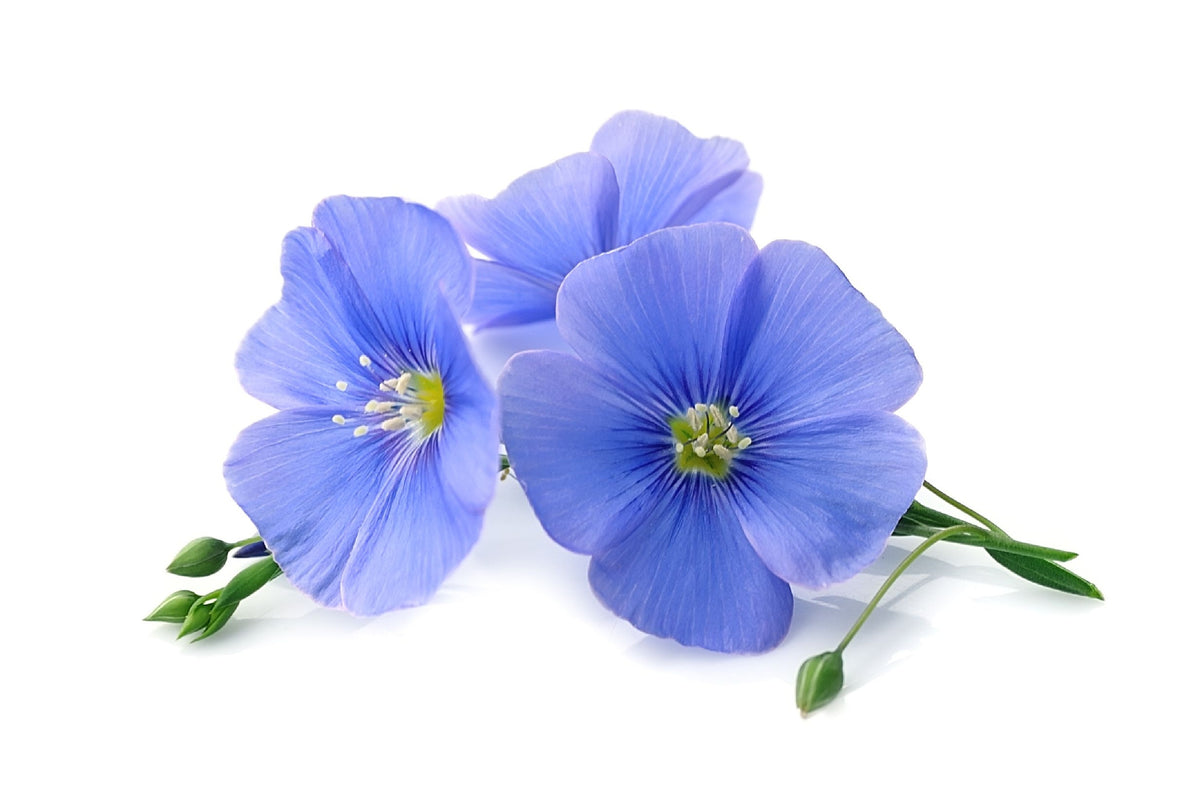
Blue flax, commonly known as flax or linseed, is a flowering plant used in skincare as a seed oil or extract, valued for its nourishing, anti-inflammatory, and protective properties, driven by its high omega-3 fatty acids and lignans.
DESCRIPTION
Blue flax, scientifically Linum usitatissimum, is an annual plant from the Linaceae family, native to the eastern Mediterranean and Middle East, now cultivated globally, including Canada and Europe, for its seeds and blue flowers. In skincare, it’s primarily used as flaxseed oil (cold-pressed from the seeds) or an extract (from seeds or plant parts), rich in alpha-linolenic acid (ALA, an omega-3, ~50–60%), linoleic acid (~15–20%), lignans, and small amounts of vitamin E and phenolic compounds. It appears in moisturizers, serums, balms, and hair products, listed as "flaxseed oil," "Linum usitatissimum seed oil," or "flax extract." Known for millennia as a source of linen and nutrition, flax’s skincare benefits stem from its emollient texture and earthy scent, aligning with natural beauty trends. The oil’s thicker consistency hydrates deeply, often blended with lighter oils for broader appeal, while its anti-inflammatory properties shine in soothing formulations.
BENEFITS
Blue flax offers several skincare benefits:
Nourishing: High omega-3 and omega-6 fatty acids hydrate and repair the skin barrier, softening dry, rough, or flaky skin with lasting moisture.
Anti-Inflammatory: ALA reduces redness, irritation, and inflammation, soothing conditions like eczema, psoriasis, or acne flare-ups.
Antioxidant Protection: Lignans and vitamin E neutralize free radicals, protecting skin from environmental damage and slowing aging signs like fine lines.
Skin Repair: Supports cell regeneration and resilience, aiding recovery from irritation, minor wounds, or environmental stress.
Balancing: Helps maintain skin’s lipid balance, reducing dryness without clogging pores, suitable for dry to combination skin types.
Note: Flaxseed oil is generally non-comedogenic but can feel heavy on oily skin unless diluted. Those with seed allergies should patch-test, and its thicker texture may oxidize if not stored properly (e.g., away from light and heat).
SOURCE
Canada