


Chamomile
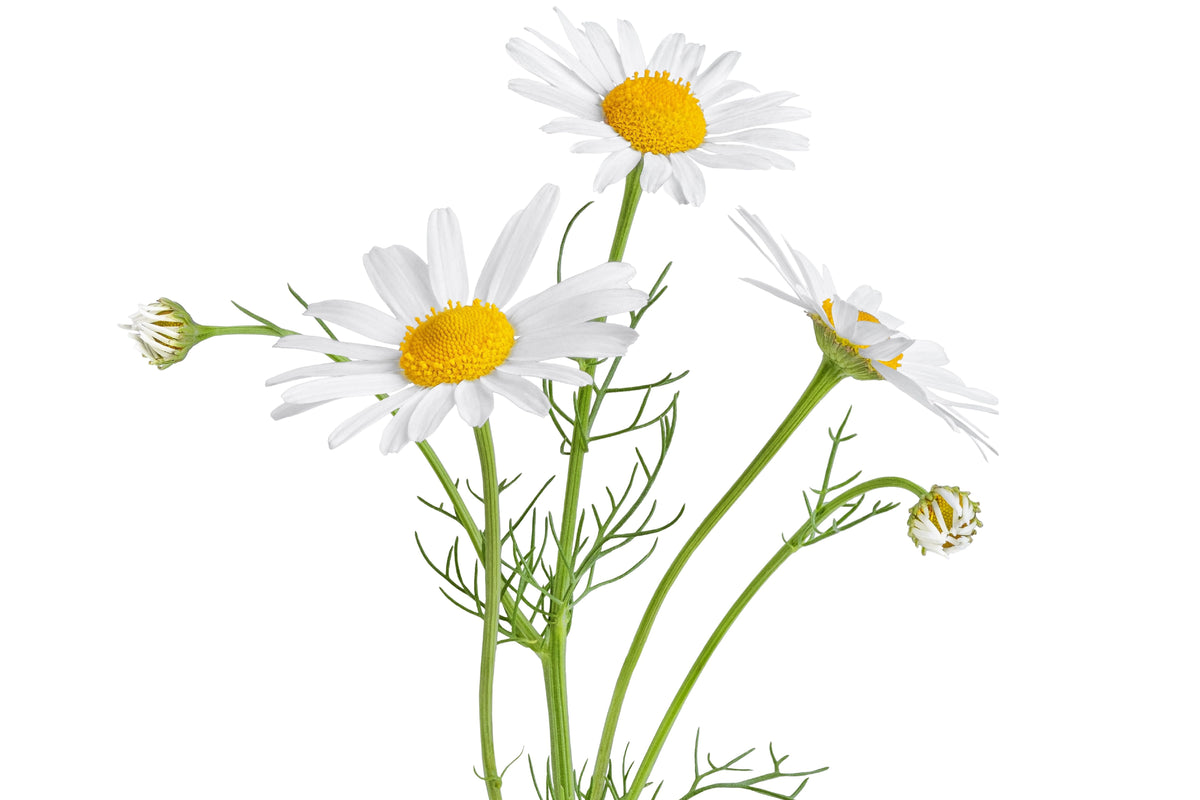
Chamomile is a gentle, daisy-like flower used in skincare as an extract or essential oil, cherished for its calming, anti-inflammatory, and antioxidant properties, driven by its chamazulene and bisabolol content.
DESCRIPTION
Chamomile refers primarily to two species: Matricaria chamomilla (German chamomile) and Anthemis nobilis (Roman chamomile), both from the Asteraceae family, native to Europe and western Asia, now cultivated worldwide. In skincare, it’s used as an extract (from dried flowers via water or solvent extraction) or essential oil (steam-distilled from blooms), yielding a soothing ingredient with a sweet, herbaceous scent. Rich in bioactive compounds like chamazulene (a blue anti-inflammatory), alpha-bisabolol, flavonoids, and phenolic acids, chamomile appears in creams, serums, toners, and masks, listed as "chamomile extract," "Matricaria chamomilla flower extract," "Anthemis nobilis flower oil," or simply "chamomile oil." Known for centuries in herbal medicine for its calming effects, it’s a skincare staple for sensitive or irritated skin, aligning with natural beauty trends. Its light texture and gentle nature make it versatile, often paired with hydrating or repairing ingredients in formulations.
BENEFITS
Chamomile offers several skincare benefits:
Soothing: Chamazulene and bisabolol reduce inflammation, calming redness, irritation, and sensitivity, ideal for eczema, rosacea, or sunburned skin.
Antioxidant Protection: Flavonoids neutralize free radicals, protecting skin from environmental damage and slowing aging signs like fine lines and dullness.
Healing: Promotes skin repair and regeneration, aiding recovery from minor cuts, blemishes, or irritation with its mild antiseptic properties.
Hydration Support: Enhances moisture retention when combined with emollients, softening skin without greasiness, suitable for dry or stressed complexions.
Brightening: Gently evens tone and reduces hyperpigmentation over time, boosting radiance for tired or uneven skin.
Note: Chamomile is widely tolerated but may cause allergic reactions in those sensitive to Asteraceae plants (e.g., ragweed, daisies). Patch testing is advised, especially for essential oil forms, which should be diluted.
SOURCE
Canada