Honeysuckle
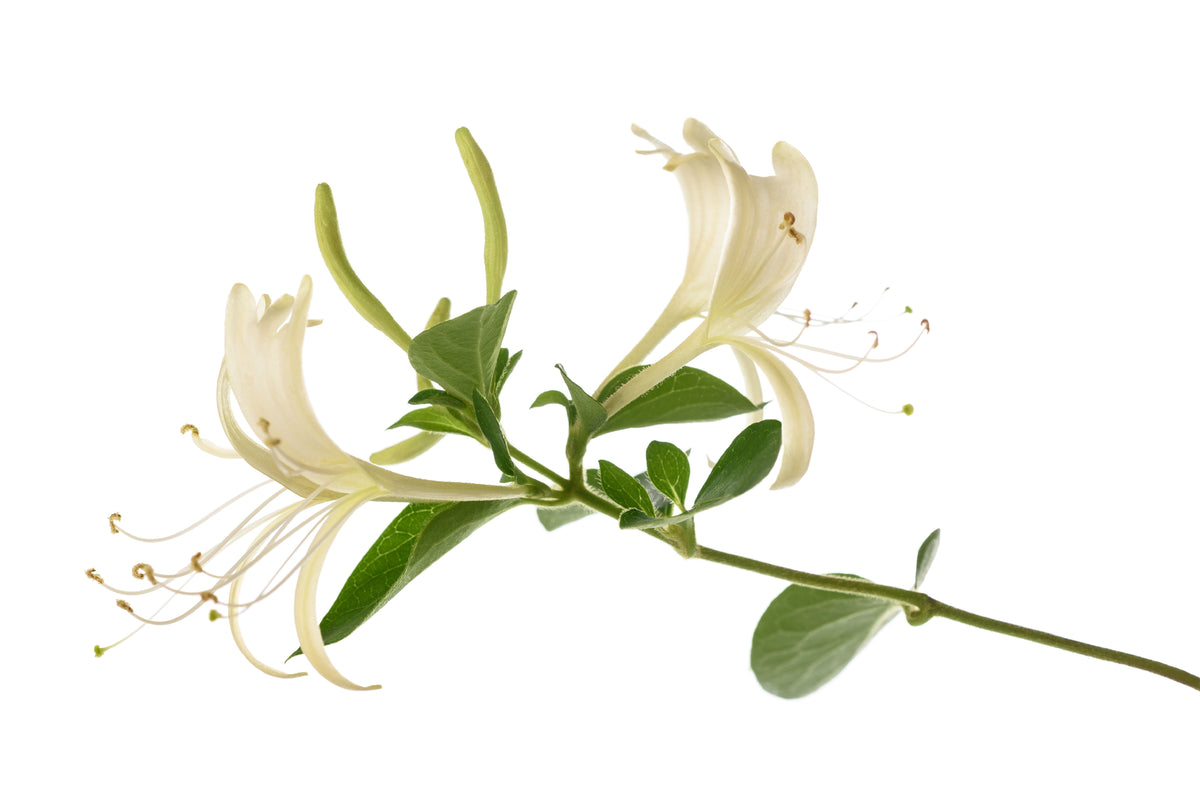
Honeysuckle is a fragrant flowering plant used in skincare as an extract, valued for its soothing, antioxidant, and antimicrobial properties, derived from its flavonoids, phenolic acids, and essential oils.
DESCRIPTION
Honeysuckle, from the genus Lonicera (notably Lonicera japonica or Lonicera caprifolium), is a climbing shrub or vine native to East Asia, Europe, and North America, often found in temperate gardens and woodlands. In skincare, it’s typically used as an extract from its tubular, nectar-rich flowers, obtained through water, alcohol, or solvent extraction, capturing compounds like chlorogenic acid, flavonoids (e.g., luteolin), phenolic acids, and traces of volatile oils. It appears in toners, serums, creams, and masks, listed as "honeysuckle extract," "Lonicera japonica flower extract," or "Lonicera caprifolium extract." Known in Traditional Chinese Medicine for its cooling and detoxifying effects, honeysuckle brings a sweet, floral scent and lightweight feel to products, aligning with natural beauty trends. Its soothing and protective qualities make it ideal for sensitive or irritated skin, while its antimicrobial action supports clarity. Formulations often enhance its gentle nature with hydrating or calming ingredients.
BENEFITS
Honeysuckle offers several skincare benefits:
Soothing: Flavonoids and phenolic acids reduce inflammation, calming redness, irritation, or sensitivity, perfect for reactive or stressed skin.
Antioxidant Protection: Neutralizes free radicals with its phenolic compounds, shielding skin from environmental damage and slowing aging signs like fine lines.
Antimicrobial: Its natural antibacterial properties help combat acne-causing bacteria, promoting clearer skin and preventing breakouts.
Hydration Support: Enhances moisture retention when paired with emollients, contributing to a soft, balanced complexion without greasiness.
Aromatic Appeal: Its delicate, honeyed fragrance uplifts the senses, adding a luxurious, calming touch to skincare routines.
Note: Honeysuckle is generally gentle but may cause rare allergic reactions in those sensitive to Caprifoliaceae plants. Patch testing is advised, especially for concentrated extracts or oils.
SOURCE
Canada