


Witch Hazel
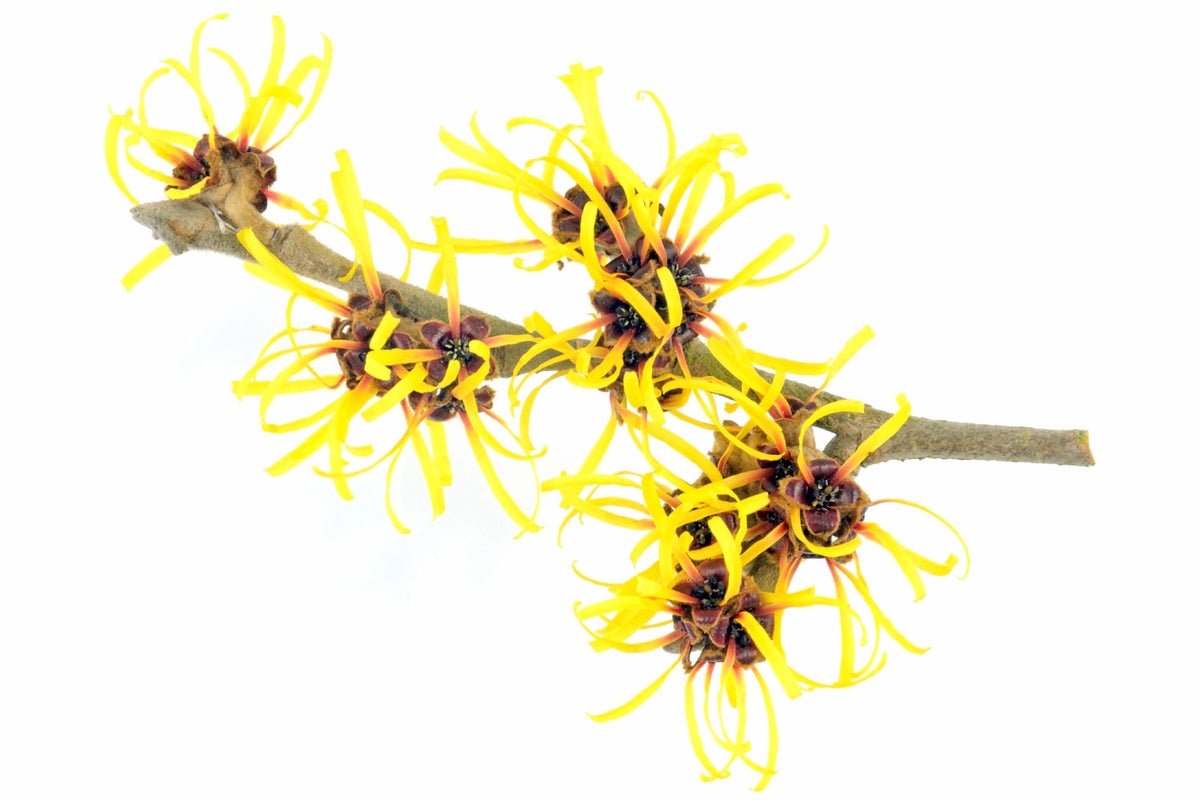
Witch hazel is a flowering shrub or small tree native to North America and parts of Asia. It blooms with distinctive yellow, thread-like flowers, often in late fall or winter. Witch hazel has been used for centuries in traditional medicine, particularly by Native Americans, for its astringent and anti-inflammatory properties. In skincare, witch hazel is widely known for its ability to soothe irritation, reduce inflammation, and tighten the skin, making it a popular ingredient in toners, cleansers, and treatments for acne, redness, and puffiness.
DESCRIPTION
Botanical Characteristics: Witch hazel belongs to the Hamamelidaceae family. It typically grows 10-20 feet tall and blooms with fragrant, yellow flowers that have long, thin petals. The plant produces small, woody capsules that contain seeds, which can "pop" and disperse when mature.
Historical Use: Native Americans used witch hazel bark and leaves to treat wounds, swelling, and skin irritations. European settlers adopted these practices, and by the 19th century, witch hazel extracts became a commercial product.
Extraction Process: The leaves, bark, and twigs of witch hazel are steam-distilled to produce witch hazel extract or hydrosol. Commercial witch hazel products often contain alcohol (as a preservative), though alcohol-free versions are also available.
Chemical Composition: Witch hazel contains tannins (like hamamelitannin), flavonoids, and volatile oils, which contribute to its astringent, antioxidant, and anti-inflammatory effects.
BENEFITS
Witch hazel is a versatile ingredient in skincare due to its natural properties. Here are its key benefits:
Astringent Properties:
Witch hazel tightens the skin and reduces the appearance of pores by causing proteins in the skin to temporarily contract. This makes it a popular choice in toners for oily or acne-prone skin.
It helps remove excess oil without stripping the skin of its natural moisture, balancing sebum production.
Anti-Inflammatory Effects:
The tannins and flavonoids in witch hazel reduce inflammation, making it effective for calming redness, irritation, and conditions like eczema or psoriasis.
It can soothe sunburns, razor burn, or insect bites by reducing swelling and discomfort.
Acne Treatment:
Its astringent and antibacterial properties help fight acne-causing bacteria and reduce oil buildup, which can prevent breakouts.
Witch hazel can also help dry out existing pimples and reduce their appearance.
Antioxidant Benefits:
The flavonoids in witch hazel provide antioxidant protection, helping to neutralize free radicals that contribute to premature aging, such as fine lines and wrinkles.
Soothes Puffiness and Under-Eye Bags:
When applied to the under-eye area, witch hazel can reduce puffiness by constricting blood vessels and improving circulation. This makes it a common ingredient in eye creams or DIY remedies.
Wound Healing and Skin Repair:
Witch hazel has mild antiseptic properties that can help clean minor cuts, scrapes, or bruises, preventing infection.
It promotes faster healing by reducing inflammation and supporting the skin’s natural repair process.
Scalp and Hair Care:
Witch hazel can be used on the scalp to reduce oiliness, soothe irritation, and treat dandruff. It’s often found in shampoos or scalp treatments for its clarifying and calming effects.
While generally safe, witch hazel can be drying for some skin types, especially if the product contains alcohol. Always patch-test before using it on your face, and avoid applying it to open wounds or severely irritated skin.
SOURCE
Canada