

Yarrow
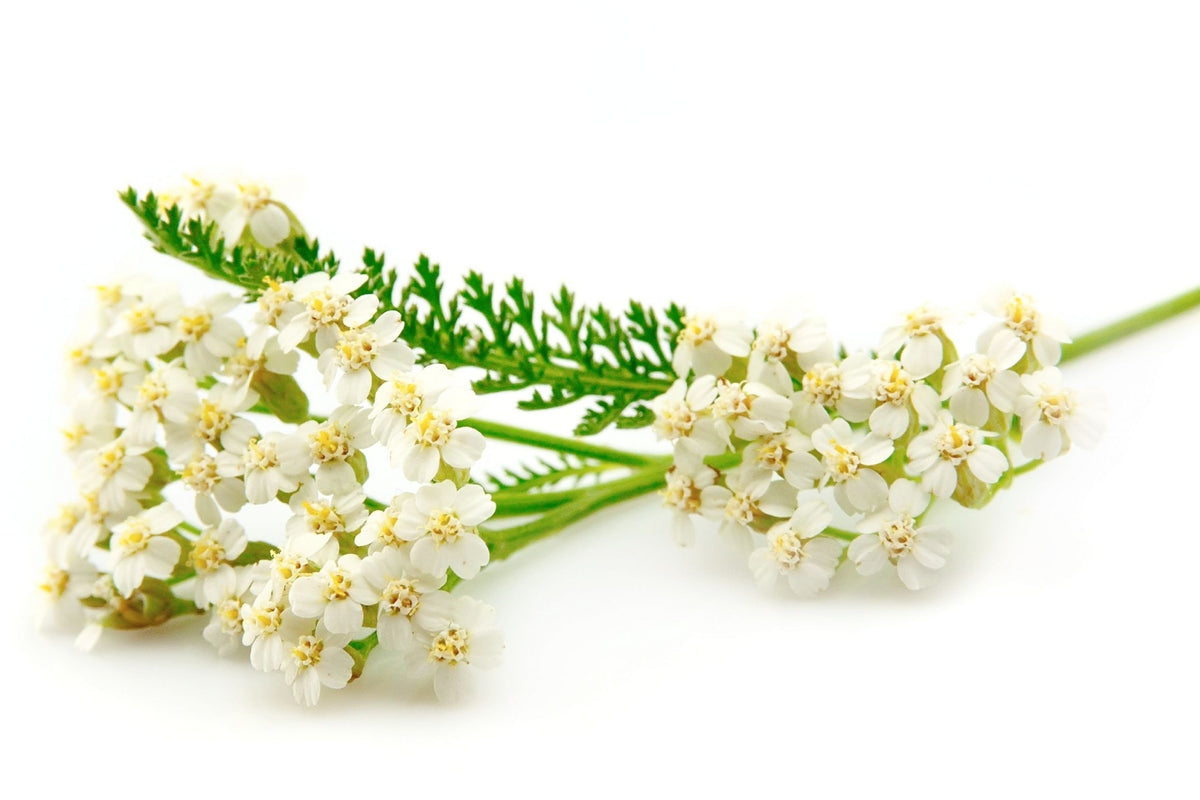
Yarrow is a hardy flowering herb used in skincare as an extract or oil, valued for its astringent, anti-inflammatory, and healing properties, derived from its rich content of flavonoids, chamazulene, and tannins.
DESCRIPTION
Yarrow, scientifically known as Achillea millefolium, is a perennial plant from the Asteraceae family, native to temperate regions of Europe, Asia, and North America, often found in meadows and roadsides. In skincare, it’s typically used as an extract (from its leaves, stems, or flowers) or essential oil (steam-distilled from the aerial parts), capturing its bioactive compounds: flavonoids, chamazulene (a blue-hued anti-inflammatory), tannins, and volatile oils like cineole and borneol. With a slightly bitter, herbaceous scent, yarrow appears in toners, creams, serums, and balms, listed as "yarrow extract," "Achillea millefolium extract," or "yarrow oil." Named after Achilles, who legendarily used it to heal wounds, yarrow carries this legacy into modern skincare, excelling in soothing and repairing skin. Its astringent nature targets oily or acne-prone skin, while its anti-inflammatory benefits suit sensitive types. Formulations often balance its potency with hydrating agents to prevent over-drying.
BENEFITS
Yarrow offers several skincare benefits:
Astringent: Tannins tighten pores, reduce excess oil, and refine skin texture, making it ideal for oily, acne-prone, or combination skin.
Anti-Inflammatory: Chamazulene and flavonoids soothe irritation, redness, and swelling, calming conditions like acne, rosacea, or minor cuts.
Healing: It promotes wound repair and cell regeneration, speeding recovery of blemishes, scars, or abrasions with its antiseptic properties.
Antioxidant Protection: Flavonoids combat free radicals, protecting skin from environmental stress and supporting a youthful complexion.
Circulation Boost: Enhances blood flow, reducing puffiness and promoting a healthy, radiant glow, especially in tired or dull skin.
Note: Yarrow is generally safe but may cause irritation or allergic reactions in those sensitive to Asteraceae plants (e.g., daisies, ragweed). Patch testing is advised, and its astringency may dry out sensitive or very dry skin if not balanced properly.
SOURCE
Canada